
Airpower, Attrition and Air Superiority: Putting the Iran War in Context – Lt. Gen. David A. Deptula USAF (Ret.)
Counter drone at the speed of light
UAS now use countermeasures such as rapid manoeuvre, rotation, thermal isolation, and reflective coatings — tactics that make large swarms harder to track and engage. Apollo, developed by Australian company, EOS, has evolved over more than a decade to meet this challenge, delivering precision engagement, high power levels, and continuous-fire capability to defeat these increasingly complex threats.
At 100kW power, Apollo can quickly defeat UAS, even when they use countermeasures. Its increased laser power and reduced dwell time between engagements enable it to disable more than 20 UAS per minute at typical ranges for swarm attack.

Changes to RAAF Heritage Fleet
Garmin Pilot
This is what we needed when we were flying!
First-ever real-world emergency activation of the Garmin Autoland system
On 20 December 2025, a Beechcraft King Air 200 made history by successfully completing the first-ever real-world emergency activation of the Garmin Autoland system at Rocky Mountain Metropolitan Airport (KBJC) in Broomfield, Colorado. See the video.
US Ally Expands Patrol Plane Fleet Amid China Tensions
23 October 2025 Newsweek article on the re-formation of No 12 Squadron.
A comprehensive history of No 12 Squadon up to its disbandment on 25 August 1989 is at: https://raafdocumentary.com/12-squadron-history/
Defence orders brutal budget cuts as AUKUS and frigate costs soar
Chief of Air Force, Air Marshal Stephen Chappell, has initiated reviews of capability and sustainment costs as part of a service-wide push to “mitigate overspending” and “address budget challenges”.
Australia’s Air Power Strategy – Chief of Air Force Outlines Vision for Deterrence and Defence
New RAAF P-8A Squadron
Number 12 Squadron has been re-established as the RAAF’s second operational P-8A squadron. At the same time, the country’s 13th P-8A Poseidon aircraft has arrived.
First F-47 now being built, will fly in 2028: US Air Force chief
The Air Force’s first F-47 fighter is now being built by Boeing, and the advanced jet is expected to have its initial flight in 2028.
U.S. MV-22B Ospreys will stay in Australia
The U.S. Marine Corps continues to refine the role of MV-22B Ospreys in anti-submarine warfare, this time with an eye on the Indo-Pacific.
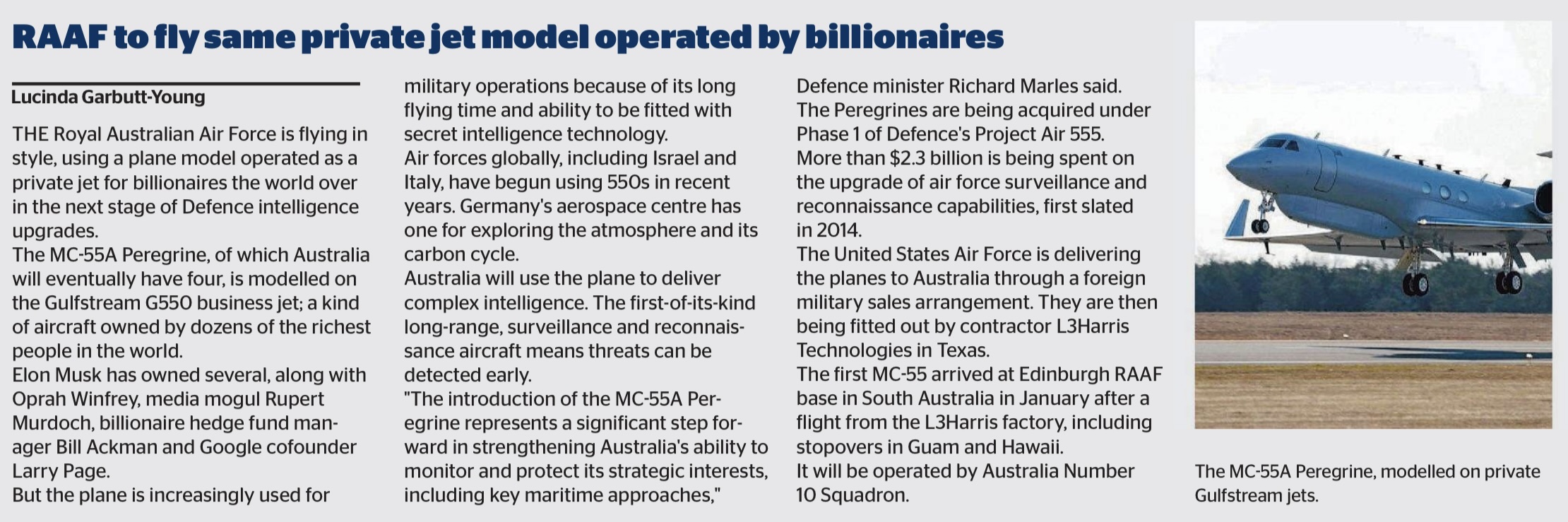
RAAF Set to Receive New Multi-Mission Aircraft
The Royal Australian Air Force (RAAF) is set to receive a new multi-mission intelligence aircraft, the MC-55A Peregrine, this year. Prime contractor L3Harris is finalising developmental work after delays in the program.
Text and 9:40 video.
Will Boom Successfully Build a Supersonic Airliner?
Boom Supersonic is an aerospace startup trying to build a supersonic airliner. The company has garnered a lot of attention recently after successfully flying their XB-1 test aircraft faster than the speed of sound, the first privately-developed aircraft to do so. Boom’s supersonic airliner, the Overture, is projected to carry 64–80 passengers (depending on how it’s configured), and is slated to begin commercial flights in 2029.
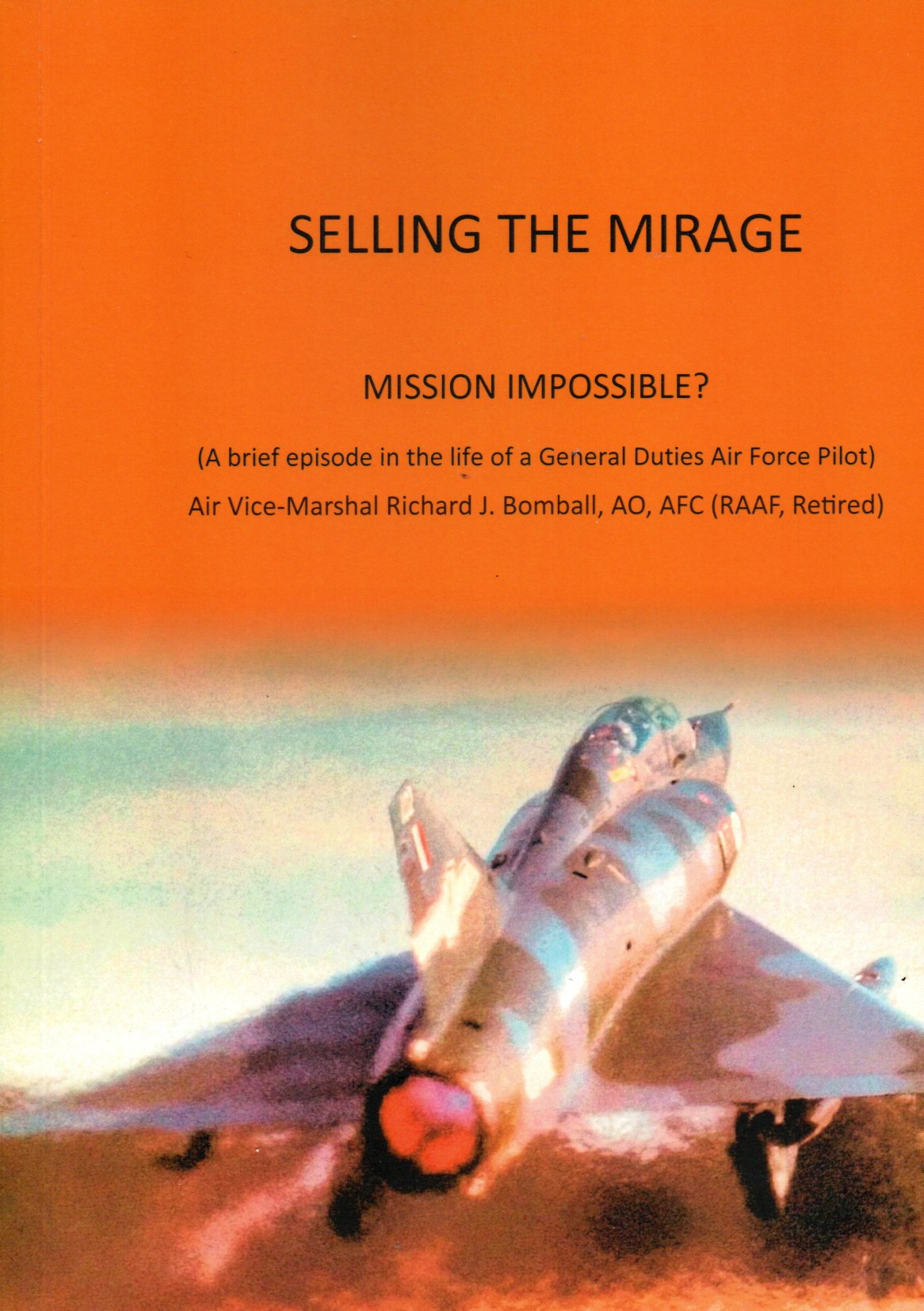
Selling the Mirage
Aviation Club member, Richard Bomball has recently published his account, as leader of the team that successfully sold the RAAF’s retired Mirage fleet to Pakistan. Richard’s book, “Selling the Mirage” is a non-profit venture financed entirely from his own resources purely for historical purposes, and is available on-line direct from the publisher at: http://www.bytespublishing.com.au/ for $27.65 (plus postage if outside of Canberra).
Selling the Mirage is a detailed account of the day-to-day activities of the team which successfully negotiated Australia’s first major international arms export: the sale of the RAAF’s retired Mirage fleet to Pakistan.
The account covers the hurried preparation, development of negotiating strategies, the events, some quite unexpected, that led to the finally agreed price and schedule of payments, and the intense period of contract negotiation.
The record includes a very extensive collection of the press clippings covering the domestic and international furore that erupted following the announcement of this controversial event.
Recognition for DroneShield (Aviation Club speaker 29 Aug 24)
New F/A-18 Super Hornet Ready to Battle
(15:20 video by Military Affairs) The US Navy workhorse F/A-18 Super Hornet is currently undergoing a big upgrade and recently was spotted carrying an air-to-air load-out unlike anything that has come before. Video previews improvements the engineers have made and implemented, how it differs from prior designs, and how it could be used in potential conflict.
Satellites go out – defence in $7bn hit
LABOR TO AXE SPACE PROJECT
EXCLUSIVE BEN PACKHAM FOREIGN AFFAIRS AND DEFENCE CORRESPONDENT
The Albanese government is poised to cancel a planned $7bn military grade satellite communications system it gave the green light to just 18 months ago because there is no money in the Defence budget to pay for it.
US defence giant Lockheed Martin was selected in April last year to deliver what was to be the nation’s biggest-ever space project – a hardened sovereign system of three to five satellites boasting the highest-level protection against cyber and electronic warfare attacks.
But The Australian can reveal the government will announce early this week – under the cover of the Melbourne Cup and the US election – that the project will not proceed.
It’s understood the government will blame the decision on multiple factors including rising costs and advances in technology that now offer a potentially better system.
The system was to use geo-stationary satellites to provide an uncrackable data network across the Australian Defence Force, providing communications and data links for its advanced fighter jets, naval assets and the army’s land forces.
The planned long-term budget for the project was put by the government at $5.2bn to $7.2bn, but it had approved only $150m to deliver it from its decade-long, $330bn capability investment plan.
The project, which was set to create 200-300 direct jobs, was to include multiple ground stations across Australia, an advanced satellite management system, and two new operations centres. Defence Minister
Richard Marles’s office declined to comment on the decision when contacted by The Australian.
But a defence industry source said: “There is no money. There needs to be money to actually start the program.”
Another source said the planned budget for the project was insufficient for Lockheed Martin – which was yet to sign a contract – to deliver it.
The company beat Airbus, Northrop Grumman and Optus to be named preferred tenderer for the project, known as JP9102.
The government and Defence officials are set to be grilled over its cancellation during a Senate Estimates hearings this week. Defence head of space systems Air Vice-Marshal David Scheul said last year that the project would deliver the first Australian-controlled military satellite system covering the Indo-Pacific region.
“Currently across Defence there is up to 89 capabilities which depend on satellite communications,” he said.
“Once delivered, the new system will increase the resilience, agility and flexibility of Defence’s military satellite capability.” Lockheed Martin has been the government’s go-to defence contractor in
recent times, winning a slew of major contracts and selection to lead the government’s $74bn guided weapons and explosive ordnance program.
The company had promised a system “defined by its extensibility, agility and resilience”.
“We are bringing to bear all of Lockheed Martin’s company-wide capabilities as well as our commitment to supporting allied nations to provide an operationally proven system that meets mission needs in terms of coverage, capacity, resilience and extensibility of the constellation,” Lockheed Martin executive vice-president for space Robert Lightfoot said after the company was selected.
Australian Strategic Policy Institute senior analyst Malcolm Davis last year declared the satellite project represented the “beginning of a transition to resilient space capabilities for the ADF”, and would be one of the nation’s most important space projects.
“This will transform ADF communications, with the satellites providing high-bandwidth, high-speed digital connectivity across a vast region, from the central Indian Ocean to Solomon Islands, and from the Arctic to the Antarctic,” Dr Davis wrote in April 2023.
“This coverage will provide ADF operations across much of the Indo-Pacific region with robust command-and-control networks.”
Dr Davis wrote that the project could “firmly open the door to a larger role for Australia’s commercial space sector”. “The large satellites at the project’s core need to be seen as the beginning of a transition to resilient space capabilities for the ADF,” he wrote.
“The JP9102 satellites may, if they are based on open-architecture design or software-based systems, take advantage of future on-orbit servicing technologies that could extend their operational life and enhance their capabilities over time.”
The looming cancellation of the project is yet another blow to the government’s plans to re-arm the Australian Defence Force to prepare for a potential war with China, and comes as five of the navy’s six Collins class submarines are out of action.
The Weekend Australian reported only one of the ageing boats is currently operational as corrosion problems, maintenance delays and long-running industrial action wreak havoc on the fleet’s availability.
There are also concerns that a fire at British defence giant BAE Systems’ yard in northern England will set back the AUKUS submarine program, which will be dependent on the UK’s submarine industry.
The government has insisted it is spending more than ever on new weapons, pledging an additional $5.7bn over the next four years in the last federal budget, and $50.3bn over the decade. But its capability investment plan has been heavily criticised for its opacity, offering few details on planned budgets and timelines.
Defence Industry Minister Pat Conroy last week announced a new factory to domestically produce 4000 missiles a year, saying it would propel the ADF into the “missile age”.
The Game-Changing Impact of Commercial Drones on Modern Warfare
One of the most significant shifts in modern warfare has been the rise of commercial, off-the-shelf (COTS) drones. These inexpensive, readily available systems have transformed battlefields from Ukraine to the Middle East, posing new threats that military forces around the world must address. Corporal Ryan Hodson, in his essay for the Air Force Writing Competition, highlights the profound implications these drones hold for the Royal Australian Air Force (RAAF) and broader defence strategies.
The COTS Drone Threat
While larger, military-grade drones have captured attention for their capabilities, it’s the smaller, commercial drones that are making a particularly game-changing impact. Sold for civilian use, these drones are fast, agile, and can be easily weaponized. Corporal Hodson’s essay, titled The Weaponisation of Toys and Implications for the Air Force, delves into the real-world challenges these drones pose to defence forces.
One of the most alarming aspects of COTS drones is their speed. Even hobbyist drones can reach speeds of up to 80 km/h, while racing drones can exceed 120 km/h. Despite their small size, these drones pose a ballistic threat, simply due to their velocity. When paired with weapons such as an RPG warhead, their versatility becomes clear—they can approach targets quickly and silently, avoiding detection by traditional methods. Unlike conventional anti-tank missiles, drones do not emit an infrared (IR) plume, meaning they can strike from above with little warning.
Detection and Countermeasures
One of the most significant challenges posed by COTS drones is their detection. Unlike military drones, which often have distinctive features, commercial drones come in a variety of shapes and sizes. Their small size and ability to manoeuvre through urban environments make them difficult to detect using traditional radar systems. This has forced militaries to consider integrating a combination of optical, thermal, and acoustic sensors to improve detection accuracy.
However, as Hodson explains, integrating these systems creates another problem—more data is added to the decision-making loop, which can slow response times. Furthermore, the interconnected nature of these detection platforms exposes new vulnerabilities. By linking sensors to central nodes for real-time data sharing, the risk of cyberattacks increases. In essence, these drones not only pose a physical threat but also become a vector for cyber warfare, expanding the attack surface for adversaries.
Counter-Drone Operations and Complications
Countering drones is more complex than it seems. While jamming systems may disable enemy drones, they can also disrupt friendly forces’ operations. This “fratricide” has been observed in the Ukraine conflict, where jamming efforts have impacted both enemy and allied drones, as well as critical radar and communication systems. In urban areas, jamming signals can inadvertently affect civilian infrastructure, such as GPS systems used by commercial air traffic.
More aggressive, hard-kill options, like close-in weapon systems (CIWS), present their own challenges. While they may effectively neutralize a drone, using such force in civilian areas could cause collateral damage, making them unsuitable in many situations.
The Need for Education and Speed
Trust is another key factor when dealing with the drone threat. With the speed at which drones can approach a target and the challenges of positively identifying whether a drone is a threat, military personnel must be well-trained to respond appropriately. For Hodson, education is essential to help pilots and operators understand how detection systems work and how to counter drone threats quickly and effectively.
The speed of innovation is a crucial point that Hodson raises. Not only are drones themselves fast, but the technology behind them is evolving rapidly. Defence forces must keep up with this pace to ensure they can adapt to new challenges and remain effective.
Navigating Legal and Operational Challenges
One of the trickiest aspects of COTS drone warfare is the overlap between civilian and military use. Drones already present problems in restricted airspaces, often due to hobbyists flying too close to sensitive areas. This raises difficult questions—how does one differentiate between an innocent mistake and a deliberate threat? Additionally, the increasing use of 5G and 6G networks complicates matters further, as these congested spectrums must now accommodate both civilian and military uses.
Hodson warns that while the threat of COTS drones is not immediate, it is significant. Drones have already been used to complement first strikes, as seen in Hamas’ use of them to overwhelm air defences. While they may not represent a complete paradigm shift, drones are nonetheless an evolving threat that demands attention.
Conclusion
CPL Hodson’s essay underscores the growing need for the RAAF and other defence organizations to recognize the implications of commercial drone technology. As drones become more accessible and versatile, defence forces must adapt their strategies to detect, counter, and defend against them. By educating personnel, investing in advanced detection systems, and addressing the legal and operational challenges posed by COTS drones, militaries can better prepare for the future of warfare.
You can read the full Corporal Margaret Clarke Award-winning essay, The Weaponisation of Toys and Implications for the Air Force, here.
Ex-RAAF Air Vice-Marshal to head Lockheed Martin in Australia

Guide To Ukraine’s Long Range Attack Drones
Boeing Defense, Space & Security has unveiled a system that allows the C-17 Globemaster III to launch multiple hypersonic missiles. Dubbed the “Revolver”, the innovative system features an advanced electromagnetic catapult system that enables the rapid launch of up to twelve X-51A Waverider hypersonic cruise missiles.
Australia awards Boeing contract for P-8A upgrades
The Increment 3 modification includes capability for four x AGM158C Long Range Anti-Ship Missiles (LRASM) – sharing an existing Super Hornet capability. The missile has a range of 300 nm and is targeted by the P-8, datalink or its own onboard IR, visual & GPS sensors.
First RAAF Triton uncrewed maritime reconnaissance aircraft arrives in Australia
Flight tracker reveals aircraft without a pilot is heading for Australia: ‘So exciting’
Reflecting on the UAV presentation to Club members on 30 May, including the possible effect of a swarm of $5,000 Australian ‘cardboard attack drones’ on a Russian air base, our Club President has kindly curated a number of articles from The Australian Defence Report (28 May) Many of the articles, especially the F-35 and Super Hornet weapons upgrades, and our northern base defences, are both illuminating and readable.
Transport Safety Investigation Bureau Preliminary Investigation Findings of Incident Involving SQ321
How drone combat in Ukraine is changing warfare
Greg Hood AO appointed Chair, Aviation Hall of Fame
The fuselage blowout on Alaska Airlines’ Boeing 737 MAX 9: What we know
NASA Sets Coverage for X-59 Quiet Supersonic Aircraft Rollout
KC-30A returns from Spain after comms upgrade – (Australian Aviation)
Royal Australian Air Force quietly bids farewell to the ‘Mighty Hunter’
First RAAF MQ-4C Triton unveiled
Mac the FAC finally gets his gong
Chicago to Washington DC flight uses 100% sustainable fuel in one engine
Qantas farewells the last B747 Jumbo Jet
RAF’s new Poseidon sub hunter flies in to thwart Russia
What’s missing from modern-day air shows
Pilots complained at least five times about Boeing 737 MAX problems, records show
Full-sized Lancaster bomber sculpture gets go ahead
The AFC In The Great War 1914-1918
Along with artist Norman Clifford, Aviation Club member Lance Halvorson has produced a magificent book, ‘The Australian Flying Corps in the Great War 1914-1918.
The Australian Flying Corps in the Great War 1914-1918 is a history of combat operations, technical details and training notes/summaries, unique to the history of the AFC in the war. The history comprises ‘war diary’ experiences of squadron aircrew, maps, technical drawings and photos, some not seen before. They provide a comprehensive insight into squadron preparations and activities from their deployment in 1916 to their return to Australia at the war’s end. Full details about the book, and how to obtain a copy of it are at The Australian Flying Corps In The Great War 1914-1918
Australian pilots not to blame for fatal crash
South African Convair crash interim report released
Seattle DASH-8 crash
Youtube video featuring some of the tower transmissions and, at the end, video of the loop and the intercept. Note the low termination of the loop! Note, also the professionalism and calm nature of the controller.
Unmanned aerial systems rolled out by Australian Army
Declining fuel reserves prompts Turnbull government security review
Spitfire pilot flies to the office
Restored WWII bomber Memphis Belle is moved into Ohio museum
Labour of love putting old war horses back in the air
First two RAAF Pilatus PC-21s commence delivery flight to Australia
Minister confirms JSF and Growler will debut at Avalon Airshow
The military may soon buy the same drones you do
Australian International Airshow 2017
11 Squadron farewells the P-3 Orion
First RAAF P-8A arrives in Canberra

Airbus delivers its 10,000th aircraft
Emirates B777 preliminary accident report
Flight safety recommendations unfulfilled 7 years after Hudson River accident
Airservices Australia job losses
Vale Eric ‘Winkle’ Brown – ‘the world’s greatest test pilot’
Doc’s first flight draws fans young and old
100 flying robots shine light on drone regulations
US Air Force Museum to spread its wings with $40M expansion
Painted planes make a quiet comeback
First RAAF P-8A takes shape at Renton final assembly line
Army delivers D-model Chinook to the Australian War memorial
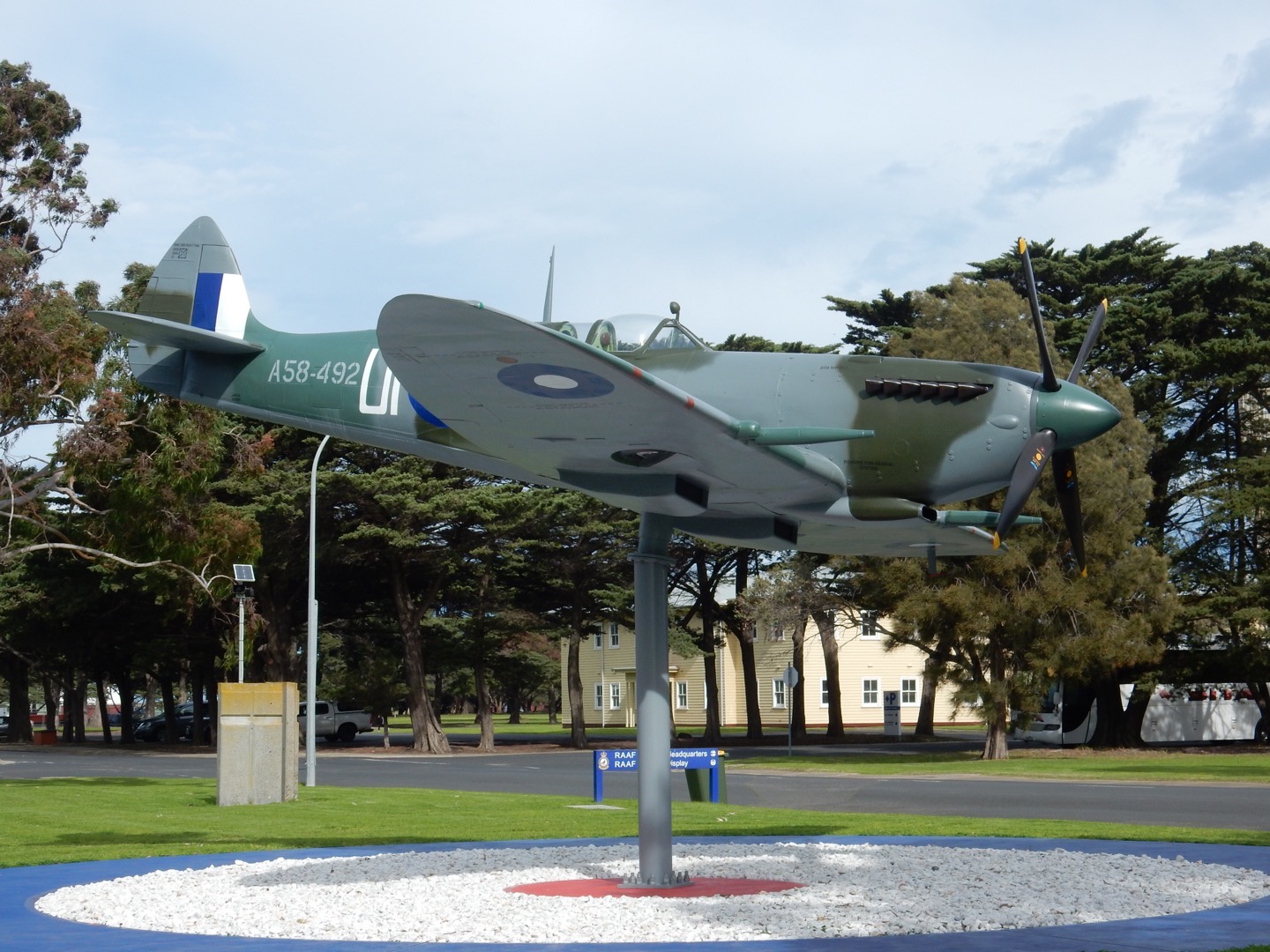
18 April 2016 – new (replica) 79 Squadron Mk VIII Spitfire A58-492 guardian for RAAF Museum
Australian-owned Fokker D.VIII flies
On Friday 1 April 2016, the first Australian-owned Fokker D.VIII took to the air for the first time. Operated by the Caboolture-based museum, The Australian Vintage Aviation Society, the aircraft, powered by an original 1918 rotary engine, flew three times on Friday.
Concerns raised about Airservices Australia and OneSKY expenses
Flight FZ981 crashes in Russia
PARAMOUNT ADVANCED, HIGH-PERFORMANCE, RECONNAISSANCE, LIGHT AIRCRAFT
USAF REVEALS FIRST B-21 BOMBER IMAGE
Pearl Harbor welcomes the Swamp Ghost
(Note reference to the role of the RAAF helicopter!)
First RAAF F-35A – KC-30A refuel
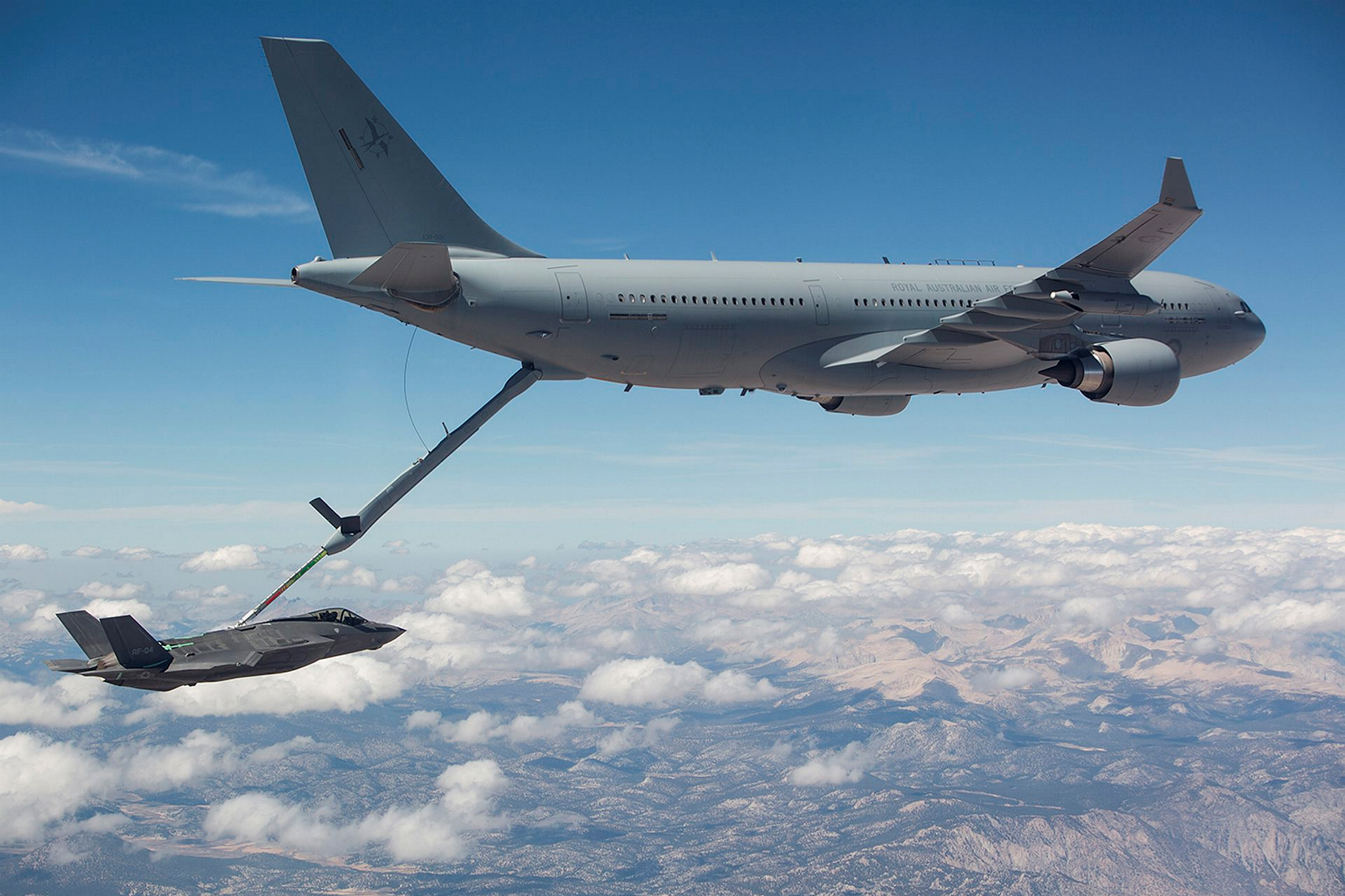 First RAAF F-35 refuels from a RAAF KC-30A
What’s next for drones? Swarming, lasers, and wingmen, military leaders say
Australia joins study of Tiger attack helicopter upgrade
Construction begins on $157m project at HMAS Albatross
Boeing delivers seven Australian Chinooks
RAAF basic flying training to relocate to East Sale
Shoreham Air Show disaster: Everything we know about plane crash
X-47B completes first air-to-air drone refueling
US F-22 Raptor stealth jets provide kinetic situational awareness over Syria
USAF plans to end MQ-1 Predator operations in 2018
US Navy Details Future Carrier Air Wing
Watch Out, China: America Sends Most Advanced Bombers to Asia-Pacific
China’s first drone war is here
Rogue drones a growing nuisance across the U.S.
Urban explorer finds sad remains of the Soviet space shuttle program
Lockheed Martin F-35 Lightning II – the Joint Strike Fighter – the full documentary
Australian forces enhance air power
US Army to acquire enhanced MH-47G Block 2 Chinooks
Fastest C-17A delivery in Australian history
 The Australian Aviation Club